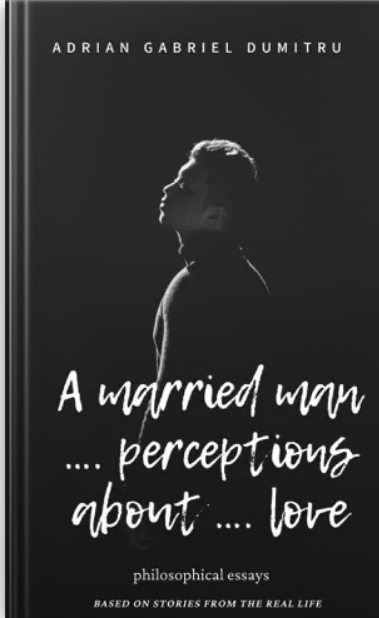
In A MARRIED MAN … PERCEPTIONS ABOUT … LOVE, Adrian Gabriel Dumitru takes readers on a journey through the intricate dynamics of love, marriage, and self-discovery.
The book is both personal and philosophical, offering Dumitru’s reflections on his own experiences of love, betrayal, and reconciliation. His insights into the concept of love extend beyond romance, touching on the importance of self-love and personal growth. Dumitru writes with a raw authenticity, offering a fresh perspective on the nuances of marriage, making this a must-read for those reflecting on long-term relationships and emotional fulfillment.
The philosophical essays invite readers to reconsider what they seek in relationships, whether they are longing for romantic love or striving to reconnect with themselves. Dumitru’s candid account of navigating his own emotional turmoil and meditations on love’s meaning provide a universal resonance that many readers will find thought-provoking. This book serves as both a reflective guide and a mirror for those confronting similar challenges in their own lives.
A standout aspect of the book is Dumitru’s exploration of the dual nature of love—its joys and its inevitable pain. He challenges the traditional expectations of marriage and relationships, showing that love is not always perfect, but it is a journey of discovery. His essays speak to the inner conflicts faced by many individuals, particularly as they age and reassess what it means to live authentically while fulfilling the commitments that come with marriage and family life.
With its deep philosophical insights and relatable themes, A MARRIED MAN … PERCEPTIONS ABOUT … LOVE is more than just a book on relationships—it’s an introspective meditation on the essence of love, human connection, and the pursuit of meaning. This book will appeal to those seeking to understand not just the institution of marriage, but the human need for love and connection in all its forms.
And what if one day … after stop loving someone that you liked so, so much … you decide to replace that big whole from your soul with loving all the people from the timeline of your life?! Today i believe that to understand the life itself we need to experience … love … in whatever form it might appear to us. It sounds weird, or even as a total nonsense … but in the end … following the paths of life …. I always realized that everything comes by itself. Not so long time ago, before becoming 40 …. I heard lots of strange ideas about the change is happening in man’s perspective about life … the next second he comes to this age. In fact … the truth is that only 2 versions worth to be mentioned … and i saw that at all my friends that had this age. One theory was that we start to have all types of medical problems … and the other one was that the man starts to be obsessed by love … love stories …. and all the women from the timeline of his life. I never had medical problems in my life … so i totally ignored the first theory ….and on another hand, working in sales for more than 20 years … i met thousands of ladies … but never had the intention to cheat my wife. So … i totally ignored both theories, but just few days before becoming 40 … a very beautiful lady … appeared in my life. She was the most unexpected person i could dream that i would start a love story with … but … it happened. The theory was right … or at least one of it. I fell in love … with that amazing soul … and i started to write all my feelings and everything related to us. I wrote so much … that one day i realized that i published 10 books carrying the word … love … inside of the title. But … same as any other story from the history of the human being … my love story had a beginning, the story itself …. and the end. Today … looking back in time, i see just the 10 books i wrote … but i would not like to read them again. Never … In my last book about love stories … “Loving, but not understanding where the love goes” … the last 2 essays i wrote tell everything it was in my heart and soul … “I miss you a lot, but i don’t want you back in my life! Never again!” … and “Awakening can be obtained at the end of the love story!”. I left the love story dissatisfied of all happened … but still … i was chasing for love. Getting back into her arms … was useless. I knew it … and even if i lied myself for such a long time … she was the same as my wife … a shrew … or at least this is how i saw both of them. I decided to let my life continue … near my family, totally forgetting the love story …. but still not ignoring my huge desire for … love. The smaller kid ….told me one day while arguing with my wife … “ You are not allowed to leave us. You are our parents and you don’t have the right to do that.” Ignoring those words … was equal with betrayal. …. A huge one. So i remained near my wife and kids … doing my duty, understanding the dharmic side of life … but still something was whispering me all the time …”love, love, love, love … love ….” I thought i need to find another lady … but my wife was paying attention now to any small detail … so i could not repeat the love story i had with that crazy lady. I was meditating a lot. On the scene of my life, i met lots of other people in the same situation as myself … that ended the love story and …. somehow started to be in a relationship with themselves. They discovered a new path …. the one of self love. But i did not know anything about the subject … and not even wanted to bother becoming more profound and connected to myself.
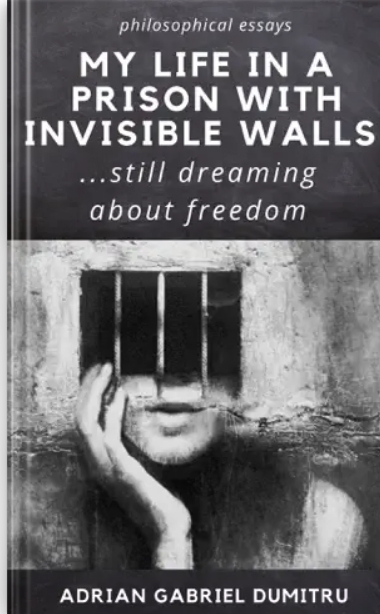
With relatable anecdotes, Dumitru contrasts the desires of schoolchildren, corporate workers, and successful businessmen, revealing that despite external achievements, true happiness often remains elusive. He powerfully argues that societal expectations, dogmas, and the quest for perfection can imprison us, and only by thinking deeper—beyond conventional paths—can we find real freedom and contentment.
Dumitru encourages his readers to examine their own lives and confront the ways they’ve been limiting themselves. His emphasis on meditation, introspection, and self-therapy offers a blueprint for personal liberation.
The analogy of perfection as a dogmatic construct that blocks happiness is especially resonant.
Dumitru urges us to reconnect with what makes us feel alive by dreaming beyond our current realities, stepping off the well-trodden paths, and embracing a life of personal freedom.
The book serves as both a wake-up call and a guide for those feeling trapped in societal molds or rigid life structures. It resonates long after the last page is turned, inspiring action, introspection, and the courage to define happiness on one’s own terms.
For anyone seeking clarity on their life’s path, this book offers both the encouragement and the tools to think deeper and discover the way to a truly beautiful, liberated existence.
Still dreaming to be free If you ask a school boy about the ideal life … that is one without homework and very long vacations. The summer vacation is the ideal time for them … but still one day the autumn is coming. If you ask an employe in a corporation about the ideal life … he will say that he would love as the working week to have 2 days of work a day instead of 5. The school boy, no matter the age … is not feeling free. Years ago … when he was not in school … he felt the freedom of doing only what he wanted to do. The employee from the corporation, even if he knows that he is paid very, very well … he is not feeling free either. But why?! Well … cause the society is teaching us … somehow by force … to live in … “prisons”. Now let me give you another example. Let’s assume the case of a businessman, that already had success, has a beautiful house, has money, a good company, a wife, beautiful kids …. basically everything. And … still … if you ask him if he is happy … he will only reply that a piece from the puzzle is missing. I know lots of businessmen that have a great success … and even if they have everything … almost all of them have a mistress that is completing their lives. It’s a non sense … i know … cause most of them have the perfect life scenario. An amazing house. A amazing car … or cars. A beautiful wife. Very nice children. … and?! Why this nonsense?! Why does a person look for something else when already has the perfect life?! Well … cause what we call … perfection … is only a dogmatic way of seeing life. The missing piece from the puzzle is the mistress … that makes him feel loved in a totally different way. She makes him be … a free person. A hobby would make the school boy and even the employee from the corporation … to love what is doing … and also feel free … enjoying the present activity. You see … no matter what path we chose in life … the moment when we forget about the dogmatic path of living … we feel the freedom. We feel alive. Our actions … will look like a total nonsense to the others … but we will be happy. The human being is looking for perfection … but the happiness is not found in there. The dogmatism will never help us to … be us. But … on the path of discovering … the real path … at least we will have the guts to … dream … about the real freedom.
In THINK DEEPER, Adrian Gabriel Dumitru takes readers on an introspective journey, urging them to question their life choices and embrace deeper thinking.
Through personal anecdotes and reflections, Dumitru explores how we allow negative elements to disturb our peace and how meditation, self-therapy, and mindfulness can help us regain balance.
His writing is both motivational and enlightening, offering practical advice for achieving a fulfilling life. A thoughtful and inspiring read, perfect for those seeking inner peace and personal growth.
Have you even asked yourself why so many people in this world are living an unhappy life?! But what about you?! Are you a happy person … or not?! And if not … have you ever thought why?! Is just a simple question, same as you would ask yourself why you don’t know skying … if you never took lessons for that?! You see … truth be told … in school we’ve learnt lots of things, including complicated math formulas, languages that we will never use in life, chemistry issues that will not serve us with nothing etc etc … but no one ever bothered to teach us at least a short list with things to do .. for having a beautiful .. and why not … an amazing life. I mean .. we can easily understand that we can’t paint if we haven’t learnt the art of painting, we can’t sing piano without a little bit of help came by a piano teacher etc etc … but when it comes to life … to our private lives in fact … we simple can’t find the path for a non ending great story. There is always something that is ruining our vibes. We find … lots of silly problems … and we actually allow them to disturb us from staying on the right spiritual frequency … and in fact … enjoy life. But … let me tell you the truth … i did the same for years … many, many years in a row. My life was kind of an emotional dance … between good and bad vibes … but i could not find a way of stopping it. I even named it … in a silly way … the dance of emotions. Until one day when i realized that this nonsense journey back and forth … from good to bad energies … was ruining my inner soul. I knew i had to stop it, but i felt i had no control over the process. It all looked like i was in a prison with invisible walls … and i had no escape at all. I started to meditate. More and more. Understood that i need to look deeper … why i have this silly balance of duality … if i want a beautiful life. This is when i started to look deeper and deeper … analyzing and defining my life from on million perspectives. In the end .. by talking to myself a lot, but also writing my thoughts … i somehow became my own therapist. I invite you in a journey of discovering the way of thinking deeper … what life is really about … and how we can remove the negative elements from our timeline … but also replace them with beautiful things that might bring us an existance fulfilled with eternal great vibes.
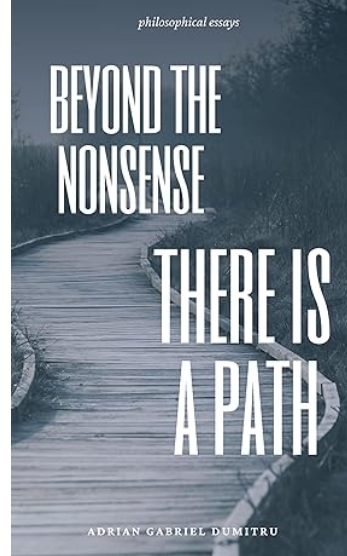
Beyond the Nonsense … There is a Path Adrian Gabriel Dumitru delves into the often-overlooked “nonsense” of our everyday lives, addressing the repetitive, robotic behaviors that trap us in cycles of discontent.
Dumitru encourages readers to look beyond these superficial patterns, suggesting that a deeper, unseen path exists beneath the surface of life’s trivialities. His writing is both reflective and thought-provoking, offering a fresh perspective on self-discovery and understanding life’s deeper meanings. It’s an engaging read for those seeking clarity and personal growth.
This book is a profound exploration of life’s mysteries, beautifully blending philosophical insights with practical reflections. Dumitru’s ability to cut through life’s “noise” and inspire thoughtful introspection makes this work both accessible and impactful.
Whether you are searching for a sense of purpose or simply seeking to understand yourself better, this book is a valuable resource on the journey of life.
And one day …. you see no difference between your world and the life in North Korea … but you don’t know why When i began to study the nonsense … i realized that … behind the nonsense there is a path that we can’t see. When i say nonsense … i mean all our silly actions … or thoughts. We live in a robotic way … and even if we are not happy in the present moment … we just continue everything in the same way … on and on and on. One day, we even start to believe that we live in a prison … or prisons. The job is a prison. The marriage is a prison. Everything around … is just a repetitive way of living … having no sense at all. There is no joy of being alive. You actually have a life similar with the one of the people from North Korea … but the problem is that you are the dictator … and you was the one that somehow chose the prison … or even built it. No one forced you to go at the job you have now and actually you can change it anytime. No one forced you to get married and in fact you can change the partner … or just … simple divorce. You see no difference between your world and the life in North Korea … but you don’t know why. Well … let me tell you the truth. You accepted the nonsense as your main way of living your life. You are the one that is responsible for your unhappiness … and in fact … you are also the one that could change everything right away. The nonsense is a pathless path … that actually goes to your soul. Accepting its presence … defining it … you realize that beyond it … there is indeed a path. The present moment. Enjoy it! The prison … even if it is only metaphoric … or a real one … is the best place you could be … but you need to understand that the only secret is that we should enjoy life and feel alive.
Through a combination of childhood anecdotes and deep existential musings, Dumitru emphasizes the importance of questioning life’s complexities.
His tone is both introspective and encouraging, urging readers to embrace life’s challenges, understand human nature, and see beauty even in the difficult aspects of existence. With a lyrical and thought-provoking style, Dumitru’s work offers a soothing, enlightening perspective on navigating life’s ups and downs.
There are many times in life when we have lots of existential questions inside of our minds. Accepting those thoughts … and actually embracing them is the path for understanding but also having a normal … and why not … also a beautiful life. I personally try to understand those existential questions from the early age of 4 or 5. One of the things that i remember from that time was that i was in the kitchen with my mother and she was explaining me that we live in a world with bad people and i should be aware of that. Maybe if she was telling me that Santa Claus was not real, i would have accepted that much easier. But i totally disliked what she told me and it was the first time when i disconnected myself from her. I told to myself … “This is not true. I will explore the world and i will prove that this is not true. Noooo … we don’t live in a world with bad people!”. It was the start of my journey on a philosophical path, that for many, many times looked like a pathless path to me, but also to the ones were looking at me. As a child i was an introvert, but today … after socializing so, so much with so many people that i met … i became an extrovert. And … i accept on the stage of my life absolutely any kind of person … i met. Even if i don’t like that person … or i don’t feel comfortable in the presence of that spirit … i continue my journey of exploring the human beings and i kind of like it. I try to … read … people … to see each one of them as a book, cause all of them … have their own stories… and i also try to somehow … invent .. a guide of surviving in this world. I felt many times, probably same as you, that my mother’s theory about the world is true … and i was too idealistic for this Universe … but i still had the hope that things will always change into better. I was exploring life … and while doing this i discovered that even in bad things, i will always find a beautiful side. So … there is an ugly and a beautiful side, but depends which one we are seeing … and the world itself can be defined as ugly or beautiful … only and only by what we actually understand from what we see. And … to learn the art of observing the world … first we need to explore life … with all its aspects and then … meditate and ask ourselves before defining anything if it’s worth losing our time with the ugly elements … when still life has so, so many beautiful sides.
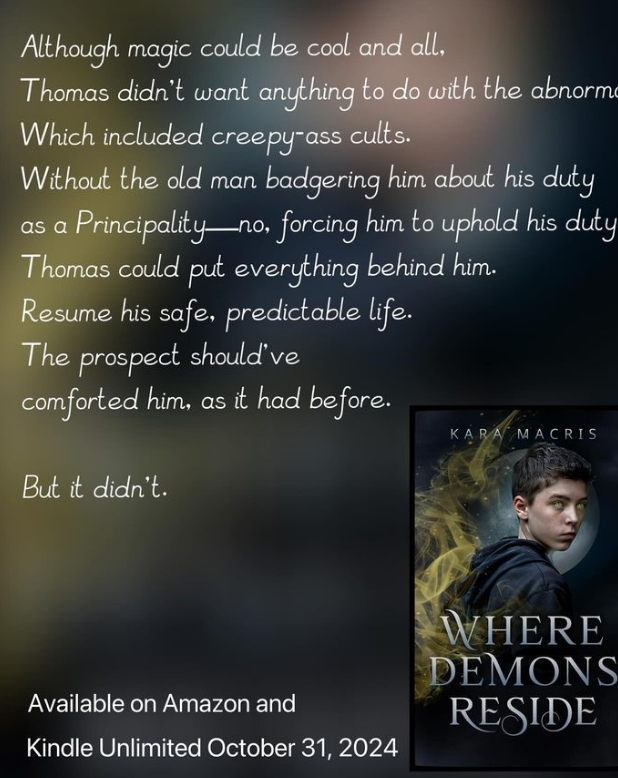
Seventeen-year-old Thomas Walker thought he was a normal teen belonging to a normal family until he learns his bloodline carries powerful magic and a sacred mission to protect humanity: exorcize any and all demons. Facing his new identity as a demon exorcist, Thomas soon discovers that demons aren’t the mindless, evil entities his grandfather warned him about—they’re tormented humans stripped of their souls and desperate for salvation. Torn between duty and compassion, he is faced with a dire dilemma. Despite the evidence that demons aren’t as monstrous as they seem, they’re still incredibly dangerous and pose a risk to humanity. But a cry for help should be answered, right? Enter Elijah Anderson, an enigmatic demon clinging to his fading humanity. He wants to not only save himself, but also help other demons escape eternal damnation. Elijah and Thomas form an inexplicable bond, and Thomas agrees to work with Elijah, rejecting everything his grandfather taught him. With the sinister Prince of Demons closing in, Thomas’s defiance of his own lineage threatens catastrophic consequences. He must gamble everything to save demonkind from eternal darkness … or risk losing himself to the very shadows he wishes to eradicate.
Where Demons Reside by Kara Macris is a gripping, supernatural coming-of-age story that delves into the blurred lines between good and evil, duty and compassion.
Seventeen-year-old Thomas Walker’s life is upended when he learns that his seemingly normal existence conceals a family legacy of demon exorcism. But the demons Thomas encounters aren’t mindless, malevolent creatures; they are tormented souls, stripped of their humanity, and desperate for salvation.
Through Thomas’s journey the author explores the themes of redemption, free will, and the weight of inherited responsibilities, all while the narration maintains a pulse-pounding pace.
One of the standout elements of Where Demons Reside is Macris’s ability to build tension through both supernatural and personal stakes. Thomas’s relationships are fraught with inner turmoil, and his character is torn between his desires and the harsh realities of his destiny.
Thomas is the last surviving Principality, responsible for protecting humanity from the demonic threat. This revelation is a turning point, both for the plot and for Thomas’s character development. Suddenly, the stakes are higher than ever—he must not only confront the demons around him but also the darkness within himself.
The appearance of dark entities who relentlessly stalk Thomas through the streets only adds to the story’s creeping sense of dread while the inclusion of Biblical references lends a spiritual undertone to the story.
In conclusion, Where Demons Reside is an enthralling, multi-layered novel that defies expectations at every turn. Kara Macris takes readers on a dark and twisted journey through the supernatural, while also offering a deep and empathetic exploration of identity, duty, and morality. With rich world-building, high-stakes tension, and complex character dynamics, this book is a must-read for fans of supernatural thrillers and dark fantasy alike.
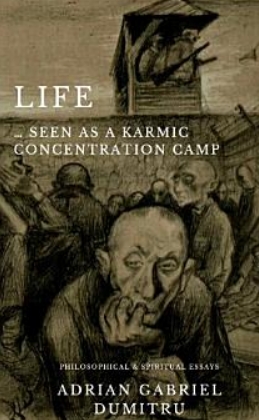
In LIFE … Seen as a Concentration Camp, author Adrian Gabriel Dumitru draws a compelling parallel between modern life and a “concentration camp,” where despite our freedom, we feel imprisoned by the circumstances, connections, and expectations that govern our lives.
Dumitru’s core argument is that life’s complexities often trap us, leading to a pervasive sense of unhappiness that is not quite depression, but a discontent born from realizing that we may never truly achieve happiness, despite having everything we once thought we desired. He speaks to the paradox of modern existence, where individuals—despite having all material comforts—feel stifled by invisible walls, unable to embrace their wild, free selves.
At the heart of Dumitru’s philosophy is the idea that most of us spend our lives acting like zombies on the stage of life, afraid of exposing our true selves and desires. We fear being pathetic, yet in trying to avoid it, we unwittingly become just that. He urges us to “fall in love” with life and stop being afraid of failure, to reject societal pressures and accept that all is temporary. This insight, coupled with his reflection that “the past is just dust in the wind” and the future is an elusive illusion, encourages readers to live in the present moment and simply enjoy it, unburdened by obsessions with what has been or what might be.
Dumitru doesn’t shy away from the uncomfortable truths about life, acknowledging that “it’s all an illusion”—our happiness, our unhappiness, our sense of purpose. In his view, life is ultimately a game we play without understanding the rules, a spiritual concentration camp where we have everything we need, yet remain prisoners of our own desires and discontent.
The author touches on deep themes like the obsession with both the past and the future, and how they blind us from appreciating the present moment. He humorously notes that the Universe sends us exactly what we don’t ask for, adds a sense of existential irony to the work.
Dumitru’s message is that we have the power to decide whether we remain in this metaphorical concentration camp or leave. Happiness is a choice, and while it may seem elusive, it can be attained by accepting life’s temporary nature, embracing the present, and shedding the societal expectations that keep us trapped.
For readers who enjoy deep philosophical musings on life’s purpose, suffering, and resilience, LIFE … Seen as a Concentration Camp is a profound and enlightening read.
LIFE … seen as a concentration camp: philosophical & spiritual essays
The weird thing is that even if we are free beings … we feel like prisoners … trapped into an unwanted reality. And all looks a lot with a … nice concentration camp. Today … i see unhappiness everywhere. At poor people … but also at people that have all what they ever wanted. All look like prisoners into a weird prison … generated mainly by their thoughts. Unhappiness… is not depression. No… Hell no … This unhappiness i am talking about… is simple the result of the fact that happiness is not there. Is not such a big suffer …. but people are conscious that life is not what they really wanted. They simple are alive … and have a life. And … it’s ridiculous that many have all they ever dreamed … but they still carry on their faces that ugly mask of … unhappiness. I look at all those people around myself … but also at my own life … and i realise that it all looks like … we live in a reality looking more like a … concentration camp. But this is a place … where we actually have all we ever wanted … except the fact that we had became … prisoners. …. Of circumstances …. of connections with people we don’t really like … of lots of other things we can’t really accept into our lives. Of course … we are in better position than the ones … suffering of depression… which are in fact living in realities … similar with the real prisons … but still we can’t express our wildness side. We are not allowed to do it. We simple have to respect lots of rules … that are ruing our chances to be happy. This ugly concentration camp … drives us crazy … but we can’t get out from there. And it looks like … we will most probably remained trapped in there … forever. There is no real way out. So … we don’t really live in a prison … but we are still prisoners … into a weird place … so similar with a concentration camp … except the fact that we have all we ever desired. The paradox itself is that the Universe allowed us as all we wanted to become real … except the fact that we probably forgot to ask for the most important thing … happiness. So … dominated by unhappiness… life keeps going … with no real hope …that something will really change. We remain … there … not realising that being happy or unhappy can actually be a simple decision … Or maybe i should say … staying in that concentration camp … or leaving is just a decision.
THE DIRTY MIND is a daring exploration of the hidden corners of the human psyche, focusing on the darker aspects of our souls that we often suppress or refuse to acknowledge.
This philosophical work delves into the idea that our so-called “dirty thoughts” are not something to fear or suppress, but rather a mirror of our internal struggles and unresolved emotional turmoil.
Author Adrian Gabriel Dumitru invites readers to confront these parts of themselves, offering a raw, unflinching examination of the sexual magnetism and energies that we often play with, knowing they may lead nowhere productive. He also argues that accepting everything—our past, present, and future—is the key to building healthier, more authentic relationships.
Dumitru believes that sometimes the best course of action is to let certain situations sink without offering help, a stark but liberating approach to dealing with toxic patterns in our lives. By stepping back and allowing the inevitable to happen, we gain clarity and growth. This acceptance, Dumitru suggests, is crucial to our emotional and spiritual healing.
His insights on the energy of life, or what he calls the “Pit Life,” are equally profound. Dumitru asserts that the Universe provides us with perfect circumstances, but we often ruin them by not following the right paths.
One of the book’s more provocative ideas is the author’s challenge to traditional beliefs. He contends that religious dogmas no longer serve their purpose in today’s rapidly evolving society. The author suggests that we must re-adapt our values to suit the modern world. He champions a new trend of following the beautiful vibes of great connections, rather than adhering to rigid, old-fashioned moral frameworks.
Overall, THE DIRTY MIND is a fascinating and bold exploration of the dark recesses of human desire, emotion, and thought. Dumitru’s philosophy challenges readers to rethink their relationships with their inner selves, their partners, and the world around them. For anyone interested in psychology, philosophy, and the art of self-acceptance, this work is a must-read.
THE DIRTY MIND: … seen as a representation of the sickness of our souls
Expressing all our ideas … or thoughts is most probably …a must.Accepting that into one point we’ll be shocked discovering our dirty minds … it’s also a must. But i believe it’s all part of understanding us as humans. Concepts us spiritual ugliness … sins … and many other similar ideas must be avoid for a while … if we really want to heal our broken souls. We should not be surprised …. or socked and not try to avoid … the truth.
In What Do You Want?!: Philosophical Essays, Adrian Gabriel Dumitru takes readers on a contemplative journey through the tangled web of human desires, exposing the complexities of what we truly want in life and why so many of us remain unhappy despite our relentless pursuit of something “more”.
Dumitru’s reflective essays dive deep into the psyche, revealing how our desires are often illusions, shaped by external influences and unexamined emotions.
At the heart of the book lies a central, perplexing question: “What do we really want?” The author argues that the reason many of us remain dissatisfied is that we don’t really know what we want, and because of that, we chase after things that may not even bring us happiness. This endless search, according to the author, is rooted in a fairy-tale mindset—an idealised version of life that leads us to believe in the unattainable or the unrealistic, leaving us disappointed and disconnected from our true selves.
Dumitru’s essays encourage us to stop hiding from these obvious truths. We are often blind to what we already have, constantly desiring what is just out of reach. Ironically, as Dumitru points out, we actually want what we already have, but we are too caught up in the illusion of wanting something else to appreciate it.
One of the most intriguing themes in the book is Dumitru’s reflection on how the Universe plays a role in shaping our desires. He describes how, humorously and often frustratingly, the Universe tends to send him the exact contradictory of what he asks for, creating an illusion that this is actually what he wanted. This playful, cosmic irony serves as a reminder that our desires are often misunderstood, and what we think we want may not always be what we need.
Dumitru’s prose is lyrical and accessible, making complex philosophical ideas easy to grasp. His personal anecdotes and reflections give the book an intimate feel, as though the author is engaging in a direct conversation with the reader.
For those interested in self-awareness and personal growth, What Do You Want?! is a powerful and thought-provoking read. Adrian Gabriel Dumitru seamlessly blends philosophy and psychology, creating a work that not only challenges readers intellectually but also inspires them to reflect on their own lives.
We always want something.We always want … what we don’t have … or maybe can’t have. Or … what can’t belong to us. Saying “I want” … is a lot related with the world of desires … but carries lots of influences … which we don’t really know they exist. Rarely … i dare to ask … seeing myself doing lots of stupid things … “What do i want?! What do i really want?!” And … honestly speaking …. I can’t really find a logical explanation … in many of those occasions.
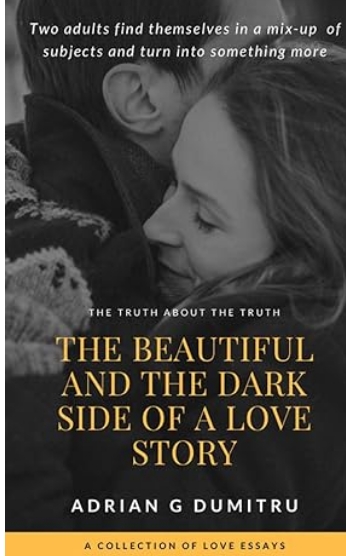
In this book, Dumitru paints a nuanced picture of what it means to fall in love and experience both the beauty and the darkness that inevitably follow.
At its core, the book attempts to study the art of living a love story—to understand how real love unfolds over time, complete with moments of joy, confusion, and heartbreak. The author suggests that in a true love story, everything must be in the first day. This concept highlights the notion that love, in its purest form, is immediate, intense, and deeply transformative from the outset, leaving both individuals forever changed from the moment they meet.
The author also delves into the life lessons that the Universe gives you through the ups and downs of a relationship. He reflects on how every love story, no matter how beautiful or painful, carries with it profound lessons—lessons about acceptance, understanding, and, perhaps most importantly, embracing both the light and the darkness in another person.
One of the more compelling themes in the book is the idea of “loving someone on silent mode”. The author explores the darker side of love, the silent suffering, and the unspoken feelings that can often dominate a relationship.
In addition to the emotional complexity, the author also examines the role of social media in love—how it can both connect and destroy, how modern technology influences romantic dynamics and how fragile love can be in the digital age.
The Beautiful and the Dark Side of a Love Story is a profound meditation on love in all its forms. Dumitru masterfully captures the tension between the fairy tale expectations we place on relationships and the gritty reality that often lies beneath. It’s a book for those who want to explore the full spectrum of love: the joy, the heartbreak, and the journey of accepting both the beautiful and the dark sides of the person they hold dear.
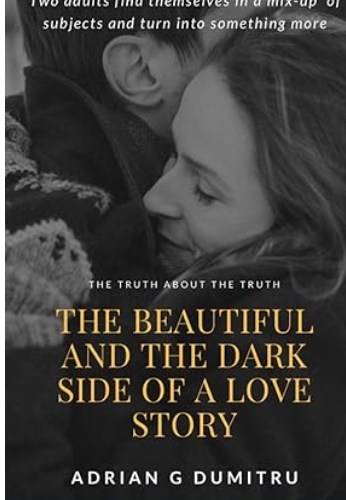
The beautiful and the dark side of a love story: Two adults find themselves in a mix-up of subjects and turn into something more
The book is trying to define the beautiful and the dark side from a man and a woman, that are in love of each other, but not as theory … but as a result of analysing facts that are happening on the timeline of the love story. It’s a book about a fairy tale, with 2 lovely characters that are not understanding, but also are not accepting that the meaning of an abstract love … or an impossible story is to enjoy only the beauty of what is going on. The 2 people from the essays get lost so many times, that not even the people around them can’t see if the story itself is real or not. But it’s all a journey of accepting the beautiful and the dark side from the person that you love so much. After the first period when you are blinded by love, it comes the second episode when you see that you are not in love with a god, but with a human being … and just as you have millions of imperfections … the same has also that magic person that you fall in love with. It’s a book that defines the fact that we should accept the things just as they are … and love with an opened heart … no matter what is going on. The nice part is that the book is not a collection of imaginary stories … but essays that talks about a real story between 2 adults that wants to redefine and also restart their lives … but in the end just enjoy the fact that they met … losing any expectation at all as the story to become a real one. Today you are happy, tomorrow you are not .. and the essays describes this in a very honest, but also beautiful way … all those amazing moments spent together.












 A book and a cup of coffee